
Tutorials · 14 October 2026 · 5 min read
What CSIRO Found When We Threw Acid at Our Coatings
We sent Obsidian S1+ and Luminous X to CSIRO and asked them to hit both with concentrated acid and a lab grade bird poo simulant. Here is everything that came back, including the parts that we will need to retest...
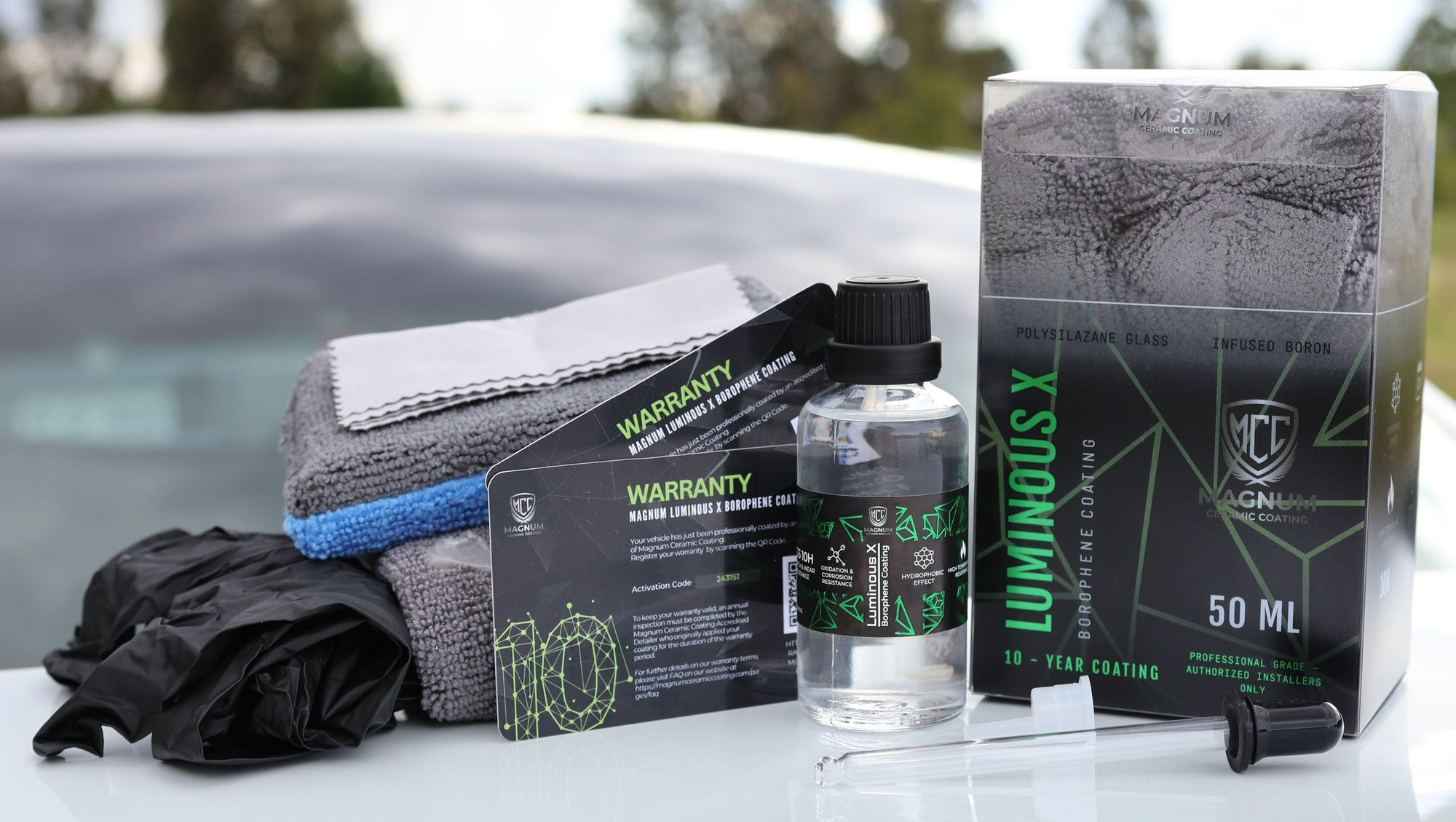
We sent Obsidian S1+ and Luminous X to CSIRO, Australia's national science agency, and asked them to hit both with concentrated acid and a lab grade bird poo simulant. Neither coating blistered, swelled or lifted. The enzyme test left no mark at all.
Most coating claims you see online come from the brand's own lab, or from no lab at all. We wanted numbers measured by someone with nothing to gain from the result. This is what came back, including the parts that aren't flattering.

What CSIRO tested
CSIRO Infrastructure Technologies tested coated panels of both products in Clayton, Victoria. The report (XC4152) was issued 13 October 2026. Two tests were run.
Chemical resistance to ASTM D1308. This is the standard method for checking how coatings handle household and industrial chemicals. One millilitre of each chemical was placed on the panel and covered with a watch glass for one hour, so nothing could evaporate. The panel was then washed, dried and inspected for discolouration, gloss change, blistering, softening, swelling and cracking.
The four chemicals:
- Hydrochloric acid, 32%. The same strength as the pool acid sold at hardware stores.
- Phosphoric acid, 85%. Industrial strength, used in rust removers and heavy duty wheel acids at far lower dilutions.
- Ethanol. A solvent found in many cleaners and fuels.
- Pancreatin slurry. A digestive enzyme blend used in automotive paint research to simulate bird droppings.
Water contact angle to ASTM C813. A drop of distilled water was placed on the coating and photographed. The angle where the drop meets the surface tells you how strongly the surface repels water.
The results
Both coatings returned identical chemical results. No blistering and no swelling from any chemical.
| Chemical (1 hour, covered) | Discolouration | Gloss change | Blistering | Swelling |
|---|---|---|---|---|
| Pancreatin slurry (bird dropping simulant) | None | None | None | None |
| Ethanol | None | None | None | None |
| Phosphoric acid 85% | Yes | Yes | None | None |
| Hydrochloric acid 32% | Yes, tarnishing | Yes | None | None |
| Product | Water contact angle |
|---|---|
| Luminous X | 98° |
| Obsidian S1+ | 96° |

Source: CSIRO report XC4152, Revision A, 13 October 2026. Tests run at 23°C and 60% relative humidity.
Bird poo: a clean pass

The bird poo result is the one that matters most to Australian owners, and it came back spotless. No discolouration, no gloss loss, nothing.
Bird droppings damage paint two ways. The white part is uric acid, typically sitting around pH 3 to 4.5. The rest carries digestive enzymes, and research on automotive clearcoat shows those enzymes break down the paint's polymer bonds, leaving etched patches and dull spots. Pancreatin is the enzyme blend researchers use to reproduce that attack in the lab.
Under a covered hour of pancreatin, both coatings showed zero change. That is exactly the job a ceramic coating should do: take the hit so your clearcoat doesn't.
Concentrated acid: marked, still intact
This is where we'll be straight with you. Both acids left a visible mark. CSIRO recorded discolouration and a change in gloss on both coatings.
One detail matters here. The test panels were bare 316 grade metal with no clearcoat or underlying paint system. Hydrochloric acid attacks bare metal like this, and the tarnishing tells us some acid worked through the thin coating to the panel underneath. On a car, it would meet clearcoat instead. That's why clearcoated panels are the right next test.
Now look at what didn't happen. No blistering. No swelling. The coating film held together under acid strong enough to burn skin.
Scale matters here. Bird poo sits around pH 3 to 4.5. Pool strength hydrochloric acid sits below pH 1. Because the pH scale is logarithmic, that is thousands of times more acidic than anything your car meets on the road. And your car will never sit under a covered puddle of it for an hour.
So the honest read is this. Against the acids your car actually faces, there is a big margin. At strengths no road throws at you, the coating marks before it fails. That's why we don't call any coating acid proof, and you should be wary of anyone who does.
What we expect on clearcoat
This part is a prediction, not a result. We'll publish the SGS retest either way.
- Tarnishing should disappear. The coating's silica network barely reacts with these acids. The tarnish came from acid reaching bare metal. On a car there's no bare metal to reach.
- Gloss change should shrink. Any acid that gets through meets clearcoat instead. Pool strength acid for an hour may still leave a faint dull mark.
- Bird poo should stay at zero change.
- Water beading should land within a few degrees of today's 96° to 98° but more with a specimen that would use clear coat and a paint system.
The retest by SGS will include a clearcoated panel with underlying paint with our ceramic coating applied on top.
Water beading: 96° and 98° on bare metal non clear coated surface.

Anything above 90° is hydrophobic, meaning water beads instead of spreading. Luminous X measured 98°, Obsidian S1+ 96°.
You'll see plenty of brands quote 110° or higher. Most of those numbers come from the brand's own testing, on surfaces and equipment they choose. Ours were measured by a third party, from photographs, under a published standard. They're not directly comparable, and we won't pretend they are as we have done our own internal testing via a different test method and achieved 115°-118° on different testing materials.
What matters on the road is that water and the grime in it roll off rather than sit. Lower surface energy also means less for contaminants like bird droppings and sap to bond to while they wait for a wash.
What it means for your car

A Magnum coated car has an independently measured buffer against the enzyme attack in bird droppings, and a film that holds together under acid far stronger than the road will ever throw at it. That buys you time. It doesn't buy you forever.
How to get the most from it in Australian conditions:
- Remove droppings the same day. Soak with a damp microfibre for a minute, then lift. Don't scrub dry.
- Wash with a pH neutral shampoo.
- Shade when you can. Heat is the accelerant for everything above.
Want the full CSIRO report? Ask your Magnum accredited installer. See the coatings tested: Obsidian S1+ and Luminous X.
Sources
- CSIRO, Chemical Resistance and Contact Angle Testing in accordance with ASTM D1308 and ASTM C813, report XC4152, 13 October 2026
- ASTM C813 scope, ASTM International
Keep reading
More from the lab


Most coatings focus on gloss